News
How we got here — every article that matters.
A chronological digest of the news, government releases, and sector reactions that built up to the NCEA replacement. Each item is summarised in plain English and links out to the original.

May 2026 — Final structure confirmed
Government confirms NCEA replacement details
PM Christopher Luxon and Education Minister Erica Stanford confirmed the new qualification names — NZCE (Year 12) and NZACE (Year 13) — and the rollout dates. Year 11 students from 2028 must take compulsory English (or Te Reo Rangatira), Maths, and Science alongside a new literacy/numeracy Foundational Award.

Government reveals structure for post-NCEA school qualifications
Subject-based assessment replacing the credit model. Students study at least five subjects per year and must pass three. New six-point A+ to E grading scale across every subject.

Compulsory exams are back — new NZCE qualification unveiled
Every Year 12 and 13 subject will include both internal assessments and a final exam. Stanford: 'Gone are the days of pick and mix.' Pass mark is C or higher. Around 3–4 internal assessments per subject across the year.

Compulsory exams are back — PM and Stanford unveil NZCE
Coverage of the announcement at Orewa. Government framing: a transcript universities and employers can read in five seconds, instead of the existing per-standard credit dump.
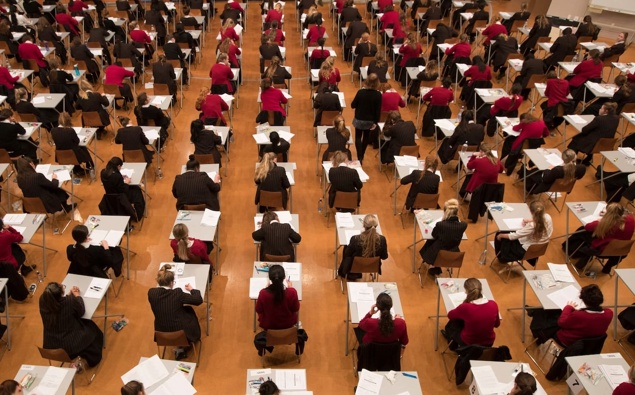
NCEA scrapped — what the new level system and awards mean for Kiwi students
Student-facing summary. Highlights the staggered rollout — 2028 Year 11, 2029 NZCE, 2030 NZACE — and the rule that no current student gets switched mid-school.

Details of NCEA replacement confirmed
Press release roundup of the official confirmation, including the subject and qualification structure.

NCEA replacement proposals — analysis and considerations
Teacher union PPTA flags concerns: compulsory exams in every subject may not suit practical or creative disciplines, science teacher shortages will hit the new Year 11 compulsory science, and the assessment model risks being too rigid. President Chris Abercrombie has also questioned the pace.
NCEA Replacement Details Finalized
Wire-style summary of Cabinet's decision and the qualification structure now locked in.

Early 2026 — Cabinet agrees the structure
Government confirms next steps on new senior secondary qualification
Cabinet agreed to the new qualification system structure. Two qualifications across Years 12 and 13, subject-based assessment, industry-led subjects integrated, Foundational Award for Year 11, and English / Te Reo Rangatira and Maths compulsory at Year 11 from 2028.
NCEA update — structure of new qualification system agreed
Ministry's formal write-up of the structure: three tiers (Year 11 Foundational Award, Year 12 NZCE, Year 13 NZACE). Confirms no student will be forced to switch systems mid-school.
2025 — The replacement proposal
Secondary teachers accept Government's collective agreement offer
Secondary teachers ratified a collective agreement — context for the workforce that will deliver the new curriculum. Pay and workload terms shape how much capacity schools have for the change programme.

Stanford, Luxon reveal proposal to abolish and replace NCEA
First public proposal of the full NCEA replacement: NZCE, NZACE, and a Foundational Award. Government opened public consultation from 4 August to 15 September 2025 ahead of a Cabinet decision by year end.
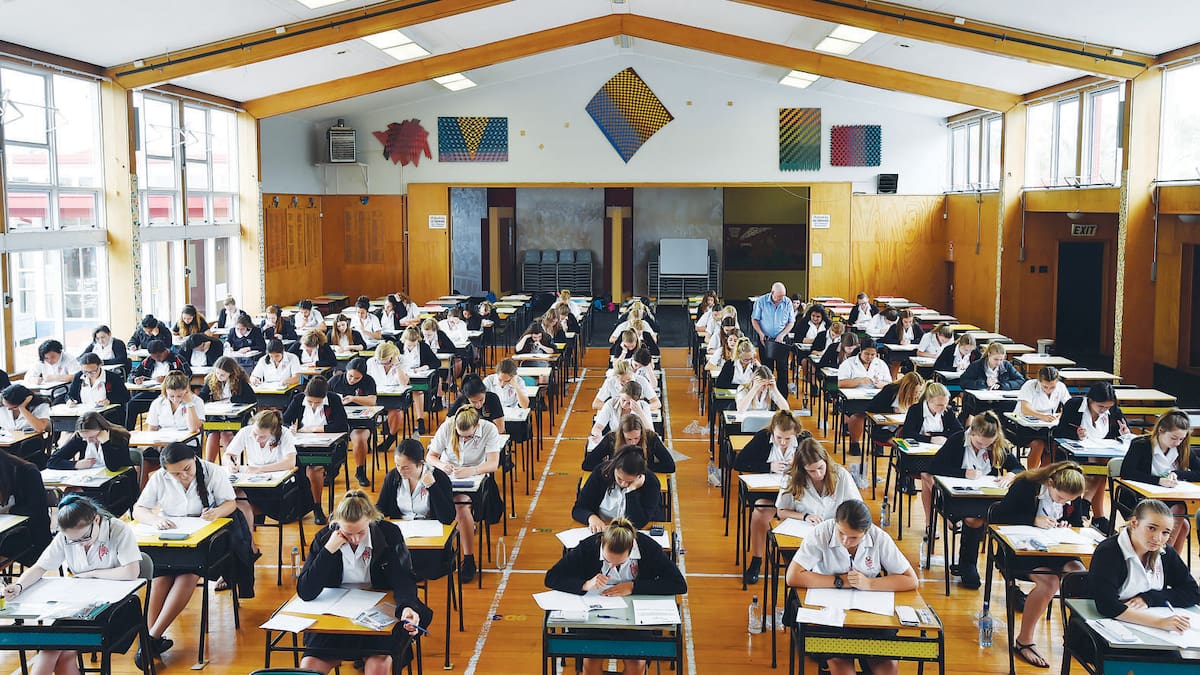
Government proposes axing NCEA, introducing new qualifications
Coverage of the initial replacement proposal. Stanford and Luxon argued the change would 'restore excellence' to NZ's education system.

NCEA changes — what you need to know
Plain-language overview of the proposal as it stood in August 2025 — before details were finalised in 2026.

Union, principals body sceptical over NCEA replacement plans
PPTA and the Secondary Principals' Association both raised early concerns about implementation pace, equity, and whether schools have capacity to deliver a wholesale qualification rewrite on top of the curriculum refresh.

2024 — Rephasing
Government to rephase NCEA Change Programme
Stanford announced a two-year delay to the existing Labour-era NCEA Change Programme to give 'certainty to teachers, parents and students' while a knowledge-rich curriculum was put in place. Set the stage for the wholesale replacement proposal that followed in 2025.
Stanford announces delay to NCEA reforms
Coverage of the two-year rephasing. The delay was framed as giving the sector breathing room — but in practice opened the door to the more radical replacement plan unveiled in 2025.
Before — Where this started
Some NCEA changes delayed, maths and literacy prioritised
Labour Education Minister Jan Tinetti delayed the original NCEA Change Programme: literacy/numeracy compulsory after 2025, Level 2 in 2026, Level 3 in 2027. Concerns had been raised after pilot results showed only a third of students passed the writing standard.

Govt pushing on with NCEA changes as only a third pass writing standard
Reporting on early pilot results: 64% passed reading, 56% numeracy, only 34% passed writing. Major concerns about whether secondary students were ready for mandatory literacy/numeracy tests. This pressure ultimately reshaped the entire reform.

Cabinet confirms the NCEA Change Programme
Origin of the change programme — Cabinet confirmed the biggest reform of NCEA since it was introduced in 2002. Goals included simpler structure, stronger literacy and numeracy, clearer pathways, and equal status for mātauranga Māori. Six years later, the project evolved into outright replacement.
About this page
Summaries are written by NZCE Coach. We link to the original article or release for the full text. If we’ve missed a key piece you’d like added, let us know.